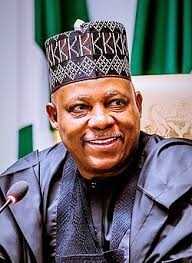
DAVOS, Switzerland — Vice-President Kashim Shettima has arrived in Davos to lead Nigeria’s delegation at the 56th Annual Meeting of the World Economic Forum (WEF), as Abuja seeks to amplify its 2026 economic pitch to global investors amid heightened competition for capital and partnerships.
The WEF annual meeting runs January 19–23, 2026, bringing together heads of state, CEOs and multilateral institutions for high-level talks on geopolitics, global growth and emerging technologies, under the meeting’s theme of “A Spirit of Dialogue.”
A key element of Nigeria’s engagement this week is the formal unveiling of “Nigeria House Davos,” described by officials as the country’s first dedicated sovereign pavilion at the Forum. The facility was set up through a public-private partnership and is designed to serve as a hub for ministerial meetings, investment roundtables and cultural diplomacy throughout the week.
Stanley Nkwocha, Senior Special Assistant on Media and Communications to the Vice-President, said the pavilion would concentrate Nigeria’s outreach and provide a structured platform for engagements with international partners.
Beyond the pavilion launch, Shettima is expected to use the Davos programme to present Nigeria’s 2026 economic outlook to an audience that typically includes sovereign investors, development financiers and corporate executives assessing risk and opportunity across frontier and emerging markets.
Nigeria’s delegation agenda also includes participation in WEF sessions on frontier technologies—particularly artificial intelligence and biotechnology—as policymakers and businesses debate investment, governance and labour-market impacts of accelerated innovation.
On the investment side, Minister of Industry, Trade and Investment Jumoke Oduwole said Nigeria would showcase opportunities across four priority areas: solid minerals, climate-sustainable agriculture, the creative economy, and digital technologies, positioning them as scalable sectors for foreign investment and partnerships.
Officials have framed the Nigeria House activation as a signal of “economic diplomacy”—a bid to move beyond general promotional messaging by convening targeted deal conversations with investors and institutional partners during the Forum’s busiest week.