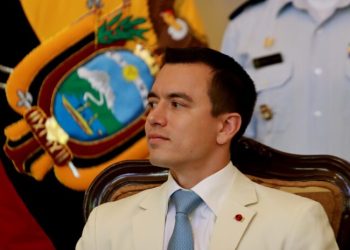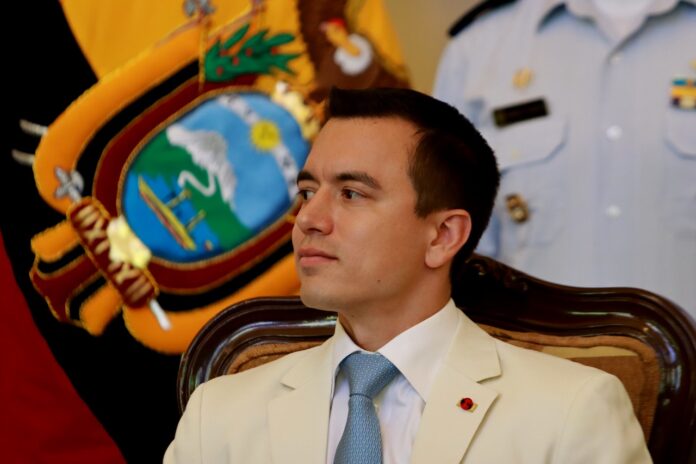
QUITO, Ecuador — Ecuadorian President Daniel Noboa has defended his U.S.-backed security strategy and pointed to improving economic indicators in his State of the Union address, as his government faces criticism over persistent violence and the growing role of the military in domestic policing.
Speaking to the National Assembly in Quito on Sunday, Noboa said his administration had extradited a dozen alleged crime bosses to the United States and seized nearly 300 tonnes of drugs. He described those actions as evidence of a firm approach to organised crime, which has become Ecuador’s most urgent public concern.
“We will seek them out, find them and extradite them,” Noboa said of wanted criminals, adding that Ecuador cannot develop “if families live in fear.”
Ecuador has struggled since 2021 with a surge in violence driven by local gangs allied with international drug cartels. The country’s location between Colombia and Peru, the world’s top cocaine-producing nations, has made its ports and trafficking routes increasingly valuable to criminal networks. In 2025, Ecuador recorded one of its highest homicide rates in modern history, about 50 killings per 100,000 residents, according to official figures cited by AP.
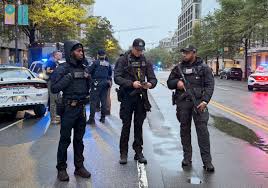
Noboa, who was first elected in a 2023 snap vote and later won a full four-year term, has relied heavily on emergency powers to confront gangs. His measures have included states of exception, joint police-military patrols, prison operations and property searches without warrants. Earlier this year, Ecuadorian forces also worked with U.S. personnel in an operation against a site allegedly used by Colombian traffickers.
Civil society groups, however, say the hardline strategy has not produced lasting security gains and has placed civilians at risk. The Guardian reported that rights groups have documented allegations of forced disappearances, torture and unlawful killings linked to Ecuador’s militarised anti-crime campaign.
Glaedys Gonzalez, an Andean-region analyst at the International Crisis Group, said Noboa’s speech appeared overly optimistic. “Progress on violence is far from being achieved,” she said, warning that Ecuador’s security situation had reached unprecedented levels.
Noboa also used the address to highlight economic gains. He said poverty fell from 26 percent to 21.4 percent in 2025, while extreme poverty dropped from 10.4 percent to 8.4 percent.
For Noboa, the speech was an attempt to project control over both security and the economy. But with homicide levels still high and rights concerns mounting, his administration faces growing pressure to prove that its crackdown can restore safety without weakening democratic protections.