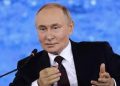

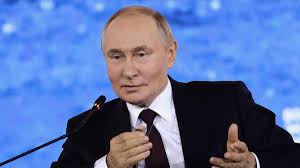
Russian President Vladimir Putin has shifted his public tone on direct talks with Ukrainian President Volodymyr Zelenskyy, saying for the first time that he would be prepared to meet him in a third country once a “lasting” agreement to end the war has been reached.
Putin made the remarks after Russia’s Victory Day commemorations in Moscow, where security was tightened amid fears of Ukrainian drone attacks. He said he had “never refused” to meet Zelenskyy, but made clear that any face-to-face encounter would come only after negotiators had already settled the main terms of a final deal.
The comment marks a notable change in wording from earlier Kremlin positions, which had either questioned Zelenskyy’s legitimacy or suggested that any meeting could take place only in Moscow and only to formalize an agreement. In April, Kremlin spokesman Dmitry Peskov said Putin was ready to meet Zelenskyy only if the meeting was to sign peace agreements already prepared by lower-level negotiators. Putin’s latest statement comes as U.S.-backed efforts to revive peace talks continue. Zelenskyy has said he expects envoys from President Donald Trump’s administration to visit Ukraine in the coming weeks for discussions on prisoner exchanges, security guarantees and possible steps toward ending the war.
However, major obstacles remain. Moscow continues to insist that any ceasefire must lead to a “lasting peace” and address what it calls the root causes of the conflict. Ukraine has repeatedly said it will not accept any settlement that rewards Russian aggression or excludes Kyiv from decisions about its sovereignty, territory and security.
The timing of Putin’s remarks is significant. Russia’s Victory Day events were overshadowed by heightened security, drone threats and a visibly restrained military parade. Kyiv, meanwhile, used the occasion to mock Moscow’s calls for a temporary holiday ceasefire, arguing that Russia wanted protection for its parade rather than a genuine path to peace.
For Ukraine, a third-country meeting could be acceptable in principle, as Zelenskyy has previously said he is willing to meet Putin anywhere except Russia or Belarus. But Kyiv is unlikely to accept a summit that merely endorses terms negotiated without Ukrainian consent.
Putin’s offer may therefore be less a breakthrough than a diplomatic signal: Moscow wants to appear open to negotiations while preserving leverage over the substance, timing and location of any final settlement.