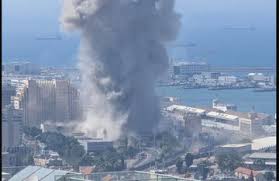
Israel carried out a wave of strikes across Lebanon on Saturday, killing at least 13 people, according to Lebanese authorities, in one of the sharpest escalations since a U.S.-brokered ceasefire between Israel and Hezbollah took effect last month.
Lebanon’s Health Ministry said an Israeli strike on the southern town of Saksakiyeh killed at least seven people, including a child, and wounded 15 others. Israel’s military said it had targeted Hezbollah fighters operating from a structure used for military purposes, but acknowledged reports of civilian casualties and said the incident was under review.
The strikes extended beyond Hezbollah’s traditional strongholds. Lebanon’s state-run National News Agency reported multiple Israeli drone strikes near the Saadiyat highway, south of Beirut, including attacks on roads linking the capital to Sidon and the Chouf region. The Associated Press reported that drone strikes near Beirut killed four people, while southern airstrikes killed at least 13 overall.
Hezbollah said it responded by launching drones and rockets at Israeli military positions, including troops in northern Israel and Israeli forces operating inside Lebanon. The Israeli military said several explosive drones crossed into Israeli territory, with one reservist seriously wounded and two others moderately injured.
Israel said it struck more than 85 Hezbollah sites in the previous 24 hours, including weapons storage facilities and launchers. The military said the operations were necessary because Hezbollah had violated the ceasefire and was rebuilding its military infrastructure.
The ceasefire, announced in April, has failed to stop regular exchanges of fire. Israel has continued to strike targets in Lebanon, saying the truce allows action against planned, imminent or ongoing Hezbollah attacks. Hezbollah, which had initially limited its responses, has stepped up retaliation after recent Israeli strikes, including one near Beirut that Israel said killed a commander in the group’s elite Radwan force.
Hezbollah lawmaker Hassan Fadlallah warned Saturday that the group would not accept a return to the situation that existed before March 2, when Hezbollah entered the wider regional conflict by firing rockets at Israel after U.S.-Israeli strikes killed Iran’s supreme leader.
The renewed violence comes as Lebanese and Israeli representatives are expected to hold another round of U.S.-backed direct talks in Washington next week. Hezbollah has criticized the process, calling instead for indirect negotiations.
For Lebanon, the latest strikes deepen fears that the ceasefire is unraveling. For Israel, the continued presence of Hezbollah fighters and weapons near the border remains a security threat. With both sides claiming justification for further attacks, the truce now appears increasingly fragile.