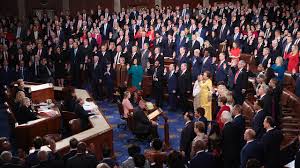
The U.S. Congress on Thursday approved legislation to fund most of the Department of Homeland Security through September 30, ending what Reuters described as an almost 11-week partial shutdown that had disrupted major agencies including the Transportation Security Administration, the Coast Guard, FEMA, the Secret Service and the Cybersecurity and Infrastructure Security Agency. The House cleared the measure by voice vote after the Senate had already passed it, sending the bill to President Donald Trump, who later signed it into law.
The bill, however, does not provide new funding for Immigration and Customs Enforcement or Border Patrol, leaving unresolved the immigration enforcement dispute that triggered the funding standoff in the first place. Reuters reported that House Republicans had delayed action for weeks because many objected to a measure that excluded the agencies at the center of Trump’s deportation agenda.
The shutdown, which began on February 14, became the longest DHS funding lapse on record, according to Reuters and AP. Pressure to act intensified after officials warned that emergency workarounds used to keep employees paid were nearing exhaustion. AP reported that more than 1,000 TSA workers had quit during the prolonged impasse, raising concerns about airport operations and security staffing.
Democrats said the delay was unnecessary, noting that the Senate had approved the same compromise weeks earlier. Republicans, however, argued that holding out was necessary to protect border enforcement priorities and secure a separate path for immigration funding. Reuters said the breakthrough came only after House Republicans advanced a separate budget blueprint that would allow them to pursue roughly $70 billion for ICE and Border Patrol through the budget reconciliation process, bypassing Democratic votes in the Senate.
The result is effectively a two-track approach to DHS financing: Congress has restored normal operations for most of the department for now, while the larger fight over immigration enforcement spending has merely shifted to another legislative arena. That means the immediate shutdown is over, but the broader political conflict over border policy, enforcement tactics and Trump’s immigration agenda remains very much alive.