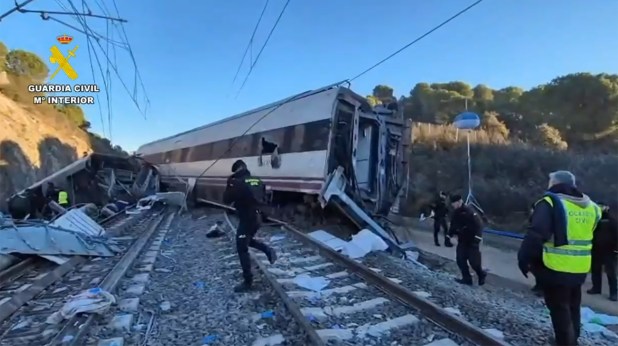
ADAMUZ, Spain — Spain is investigating one of its deadliest rail disasters in more than a decade after two high-speed trains collided late Sunday near the town of Adamuz in Córdoba province, killing at least 40 people and injuring dozens, regional and national authorities said.
The crash occurred when a northbound train operated by private company Iryo, travelling from Málaga to Madrid, derailed and struck a southbound Renfe service heading from Madrid to Huelva, according to officials and media reports. The impact overturned multiple passenger cars and sent some carriages down a slope, complicating rescue efforts in the hours that followed.
Andalusia’s regional president, Juan Manuel Moreno, said 41 people remained hospitalised, including 12 in intensive care. Families gathered at hospitals in Córdoba to seek information as authorities worked to identify victims, with officials asking relatives to provide DNA samples where needed.
Prime Minister Pedro Sánchez travelled to the scene on Monday and pledged “absolute transparency” in determining the cause of the collision, announcing three days of national mourning. Several Spanish outlets reported Sánchez cancelled a planned trip to the World Economic Forum in Davos following the disaster.
Spain’s Transport Minister Óscar Puente described the incident as highly unusual, noting it happened on a straight stretch of track that had been recently renovated, and involved relatively new rolling stock. Investigators are examining whether a track or equipment failure triggered the initial derailment. Reuters reported that preliminary assessments were looking at a potential track defect, though officials cautioned it was too early to draw conclusions.
Survivors described violent jolts, darkness and screams as passengers tried to escape through windows and across the roof of tilted cars. Local residents also joined emergency crews, bringing blankets and helping to move injured passengers until ambulances and heavy equipment reached the remote site.
The collision is the worst on Spain’s railways since the 2013 Santiago de Compostela crash in Galicia, which killed 79 people. While Spain’s high-speed network has long been held up as among Europe’s safest, the Adamuz disaster has renewed questions about maintenance, signalling safeguards and the resilience of infrastructure under sustained high-speed operations.