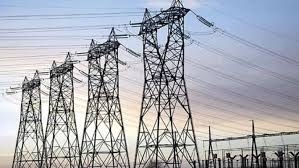
ABUJA — A nationwide power shutdown was narrowly avoided on Thursday after electricity workers suspended their strike roughly 10 hours in, following an emergency meeting convened by the Federal Government to address a festering labour dispute at the Transmission Company of Nigeria (TCN).
Senior officials representing the Minister of Power met with the Federal Ministry of Labour and Employment, management of TCN and the Nigerian Independent System Operator (NISO), alongside leaders of the National Union of Electricity Employees (NUEE) and the Senior Staff Association of Electricity and Allied Companies (SSAEAC). The talks produced a communiqué setting out timelines and safeguards intended to defuse the crisis.
Under the agreement, unions accepted the minister’s appeal to review a standing committee’s report on Oct. 6–7, 2025, with implementation to begin later in October. TCN and NISO will jointly compute the financial implications of the report and submit an implementation plan to the minister and the unions. Parties also agreed to reconvene to resolve any outstanding issues. The Nigerian Electricity Regulatory Commission (NERC) was directed to expedite its tariff review to support smooth execution of the pact. Crucially, all sides committed that no employee would be victimised for participating in the action.
Union leaders hailed a “measured victory,” while warning they would resume industrial action if the agreement is breached. The truce eased fears among households and businesses already bracing for a prolonged blackout.
The strike launched by NUEE was triggered by unresolved welfare and operational grievances, including the non-implementation of the new national minimum wage, casualization of staff, unpaid salaries since April 2025, lack of operational tools and vehicles, and the failure to provide personal protective equipment (PPE) since 2021. Workers also cited lingering issues from the unbundling of TCN and unpaid retirement benefits. In a Sept. 24 circular, NUEE’s acting General Secretary Dominic Igwebike accused TCN management of treating critical concerns with “levity,” saying members could no longer “fold our arms while our rights are trampled upon.”
With Thursday’s accord, focus shifts to the October review window, when government, operators and unions must convert commitments into concrete steps on funding, staff welfare, safety gear, and system operations—moves seen as essential to stabilizing the Nigerian Electricity Supply Industry (NESI) and preventing a fresh breakdown in talks.